Mission
The Bell Project is a journalist-led newsroom that examines torture in the American criminal justice system using investigative reporting, data journalism and community engagement.
Values
The Bell Project is founded on a dedication to the truth, transparency and accountability to the public, and a commitment to fairness and justice.
Background
We are the journalists who reported the Pulitzer-finalist series that exposed a group of sheriffs deputies who tortured residents of a Mississippi county for a generation. What we uncovered in Mississippi raised a simple but important question: how often do police and corrections officers commit such extreme abuses today?
As we collected dozens of similar allegations across the country, we found that torture has not only shaped America’s past—it persists today. Yet no comprehensive effort has examined its modern scale or established a shared factual record.
The Bell Project will create the first national archive of torture allegations involving law enforcement and corrections officers—a public resource that communities, journalists, policymakers, and law enforcement leaders can learn from.
In partnership with national and local media organizations, we will produce investigative reporting that informs the public and identifies the conditions that allow police torture to occur. Our reporting will be grounded in documentation, context, and fairness.
Beyond reporting, The Bell Project will expand the traditional model of investigative journalism by prioritizing collaboration over extraction. We will host town halls and listening sessions to facilitate dialogue with affected communities. We will develop training programs to help community members responsibly document allegations and preserve evidence. And as local newsrooms continue to shrink, we will train local reporters to use our archive and investigative methods, strengthening local capacity to uncover and address abuse.
Why The Bell Project?
The last national effort to account for torture by American police was nearly a century ago, when a presidential commission published a report finding widespread use of torture at jails, prisons, and law enforcement agencies across the country. The report detailed a 1929 Arkansas case involving a young Black man, identified in court records only as “Bell,” who was sentenced to death for a murder he did not commit after a prison warden tortured him into a false confession. But Bell refused to let the truth be buried. He fought his charges and was eventually freed. The Bell Project honors his memory and continues his fight to expose the truth.
Our Team
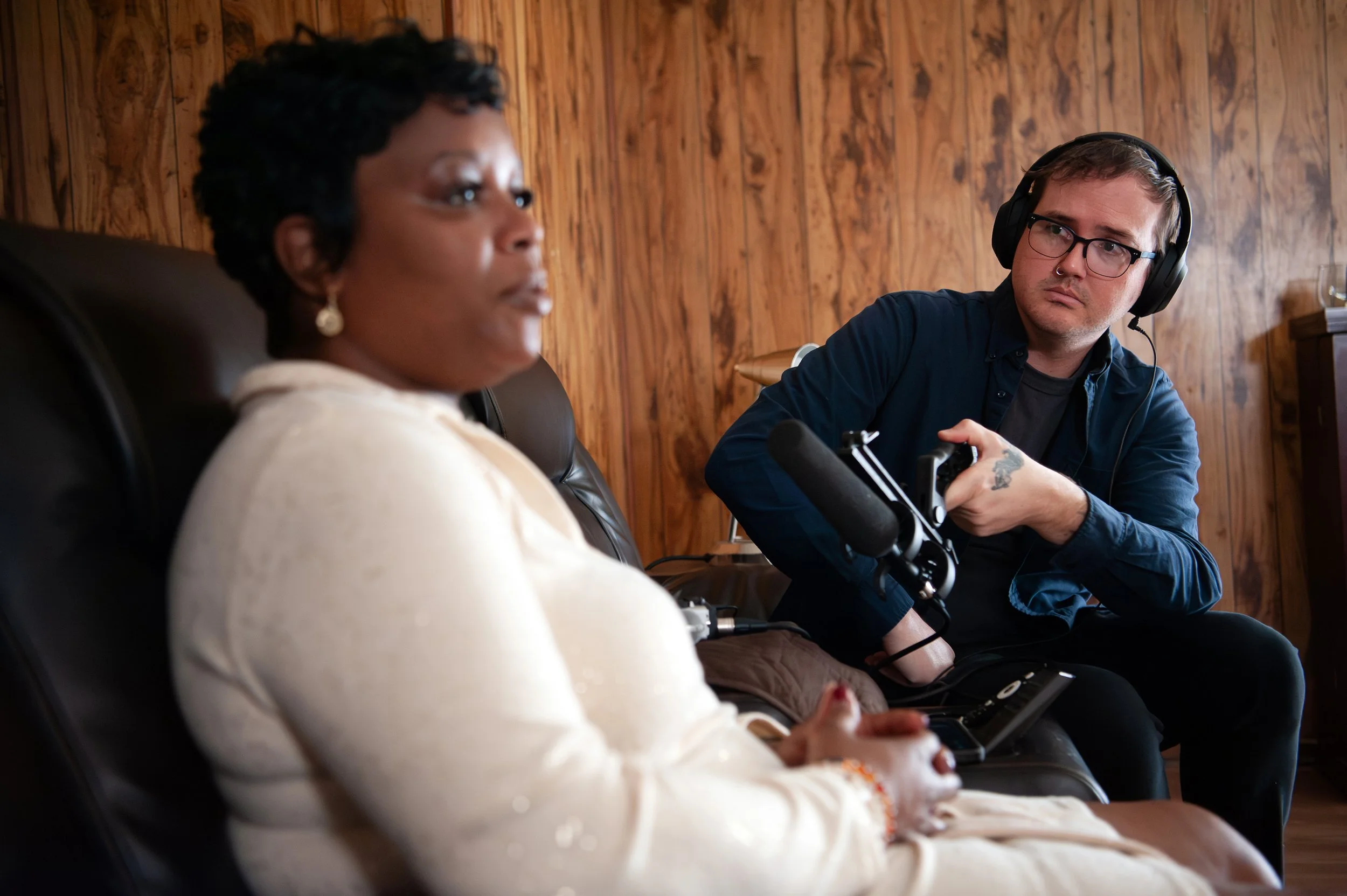
Photo ©Rory Doyle
Brian Howey (he/him)
Co-Founder & Lead Investigative Reporter
Brian’s reporting has inspired new police oversight laws in two states, sparked policy reviews at multiple law enforcement agencies, and prompted a Justice Department investigation into a Mississippi sheriff’s office. A 2024 Pulitzer Prize finalist, he has published work in the The New York Times, The Washington Post, and the Los Angeles Times, and his reporting has won a George Polk Award and a duPont-Columbia Award, among others. He earned his master’s degree from the UC Berkeley Graduate School of Journalism and is a proud community college graduate.
See more of Brian’s work here.
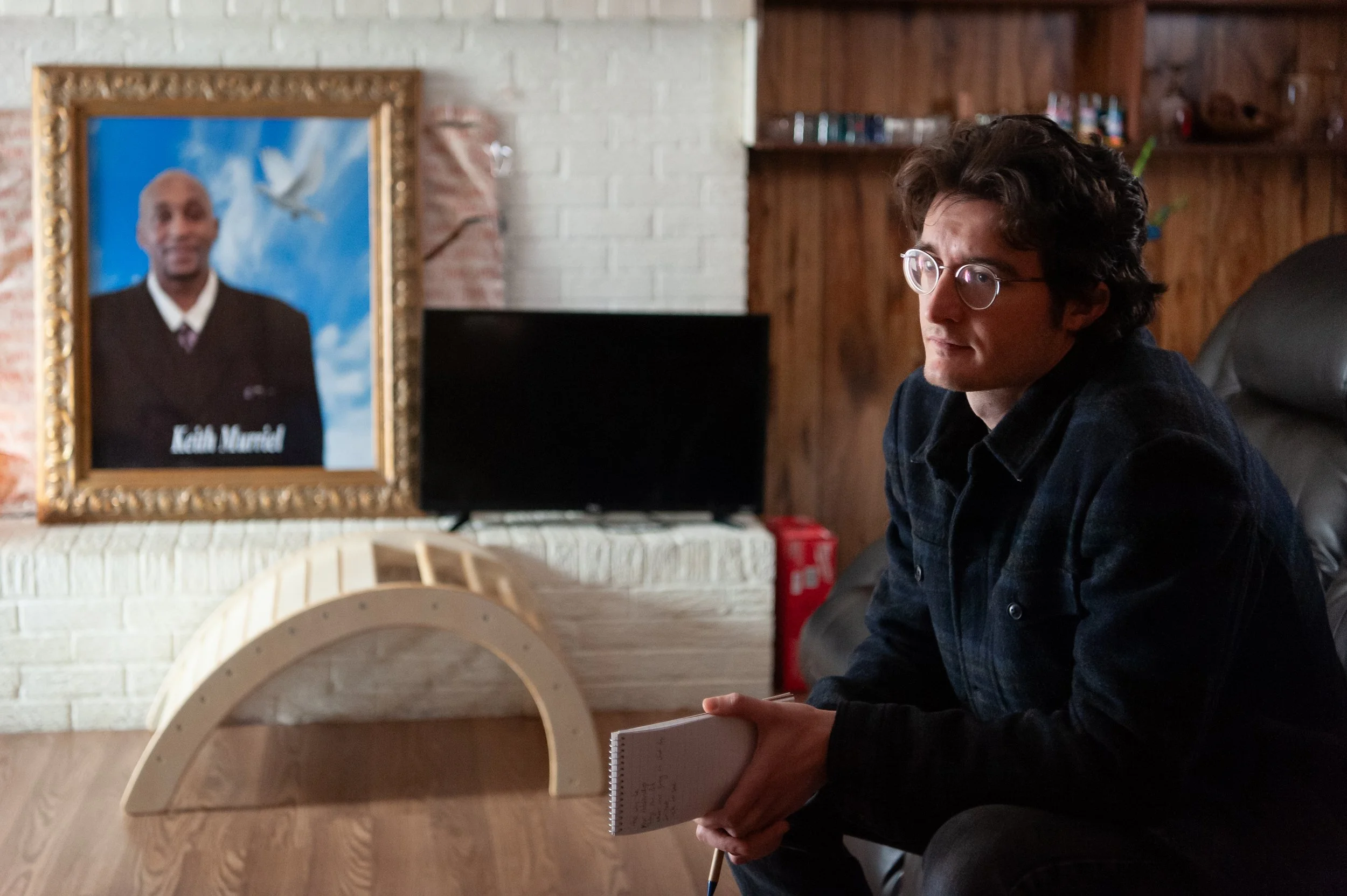
Photo ©Rory Doyle
Nate Rosenfield (he/him)
Co-Founder & Lead Investigative Reporter
Nate's reporting has helped spur new laws and led to criminal and civil rights investigations. His previous work has appeared in The New York Times, the Guardian, Mississippi Today, the Tampa Bay Times, Grist Magazine, and elsewhere. His investigations into Mississippi sheriff's deputies that tortured residents for two decades was the recipient of an Edward R. Murrow award and was a finalist for a Pulitzer Prize and two Goldsmith Awards among other prizes. He graduated from Columbia Journalism School’s Toni Stabile Investigative Fellowship.
See more of Nate’s work here.
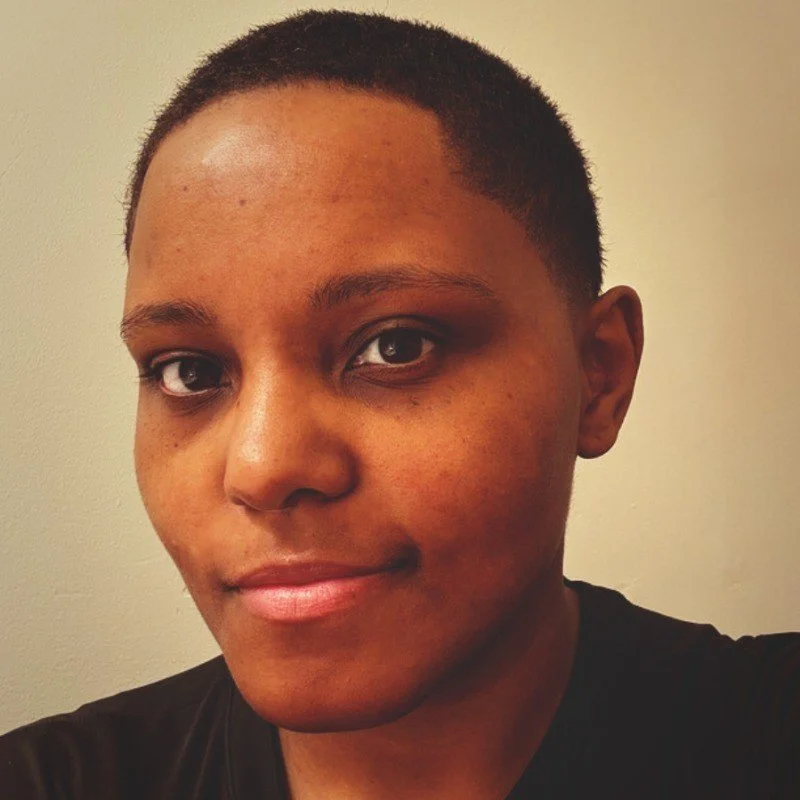
Dilcia Mercedes (they/them)
Data + AI Lead
Dilcia formerly worked as a Data Journalist at CBS News, where they contributed to breaking news reporting and in-depth investigations. Additionally, they built newsroom tools and ETL systems to provide CBS News with fresh data on key subjects on a recurring basis. Dilcia’s journey into data started at Big Local News, part of the Stanford Computational Journalism Lab, where they focused their data and tool building projects on standardizing local data sets across jurisdictions, regions and states to create more comprehensive datasets for large-scale national and local concurrent investigations. Dilcia previously interned with Reveal at the Center for Investigative Reporting. They graduated with a master’s degree in journalism from Stanford University.
Advisory Commitee
Lisa Armstrong is an award-winning journalist with credits in The Intercept, The Daily Beast, Rolling Stone, Mother Jones, The New Yorker, and other outlets. She has reported from several countries. She has written about the spread of COVID19 in New York State prisons and Miami jails, and produced a documentary for CBS News about the role that poor mental health care provided by for-profit companies has played in an increase in suicides in state prisons. Armstrong also directed a documentary about a young man who was incarcerated in an adult prison when he was 16. The film, “Little Boy Lost,” was paired with live music and spoken word poetry as narration. It was featured in the Social Impact track at SXSW 2018. Armstrong was a 2020-2021 Knight-Wallace Reporting Fellow, 2019 United States Artists Fellow in Writing and a 2018 Justice Reporting Fellow for the John Jay/Langeloth Foundation Fellowship on Reinventing Solitary Confinement. Before coming to UC Berkeley, Armstrong was an associate professor at the Craig Newmark Graduate School of Journalism, where she taught for 12 years.
David Loy became legal director of the First Amendment Coalition in February 2022. He is an experienced litigator who has defended free speech, a free press, and the people’s right to know for over 25 years. Since joining FAC, David has defended the First Amendment and open government laws in state and federal courts, winning legal victories protecting access to public records and the right to report the news. In 2024, the Northern California chapter of the Society of Professional Journalists recognized him with a James Madison Freedom of Information Award. He received a 2025 Visionary Award from California Safe Schools. Before joining FAC, David served as legal director of the ACLU Foundation of San Diego & Imperial Counties for almost 16 years. He also worked as a staff attorney with the Office of the Appellate Defender in New York City, a public defender in Spokane, Washington, and a staff attorney with the Center for Justice in Spokane. He graduated from Northwestern University School of Law in 1994 and clerked for Judge Dolores K. Sloviter of the United States Court of Appeals for the Third Circuit.
Lisa Pickoff-White is an investigative data journalist. As research director at the Police Records Access Project she collaborated with teams of engineers, academics and researchers to use machine learning to extract data from police use-of-force and misconduct records, driving impactful reporting and powering a public database. She's also worked on award-winning investigations for KQED, the Center for Investigative Reporting and other outlets.
Joshua Cinelli, founder and CEO of JCC LLC, is a strategic communications advisor providing senior-level institutional communications counsel to mission-driven organizations. With a background in journalism, political campaigns, state and federal government, and philanthropy, Joshua works directly with advocates and leaders across the country to strengthen readiness, public-facing communications, and media engagement. Joshua serves as an advisor on matters of crisis communications to the Resilient Democracy Hub, the Safety Sync Group, and Perceptist, engaging a range of clients across sectors. Joshua previously served as chief of media relations at the Ford Foundation, a media advisor at the Federal Communications Commission, and as director of executive and enterprise communications at Consumer Reports. A graduate of the second class at the CUNY Graduate School of Journalism, Joshua previously covered local, state, and federal politics at outlets including the New York Daily News, the Portland Mercury, and Huffington Post.
Jerry Mitchell, a senior investigative reporter at Mississippi Today, has helped put four Klansmen and a serial killer behind bars. His stories have also helped free two people from death row, exposed injustices and corruption, prompting investigations and reforms as well as the firings of boards and officials. He is a Pulitzer Prize finalist, a longtime member of Investigative Reporters & Editors, and a winner of more than 30 other national awards, including a $500,000 MacArthur “genius” grant. After working for three decades for the statewide Clarion-Ledger, Mitchell left in 2019 and founded the Mississippi Center for Investigative Reporting.